
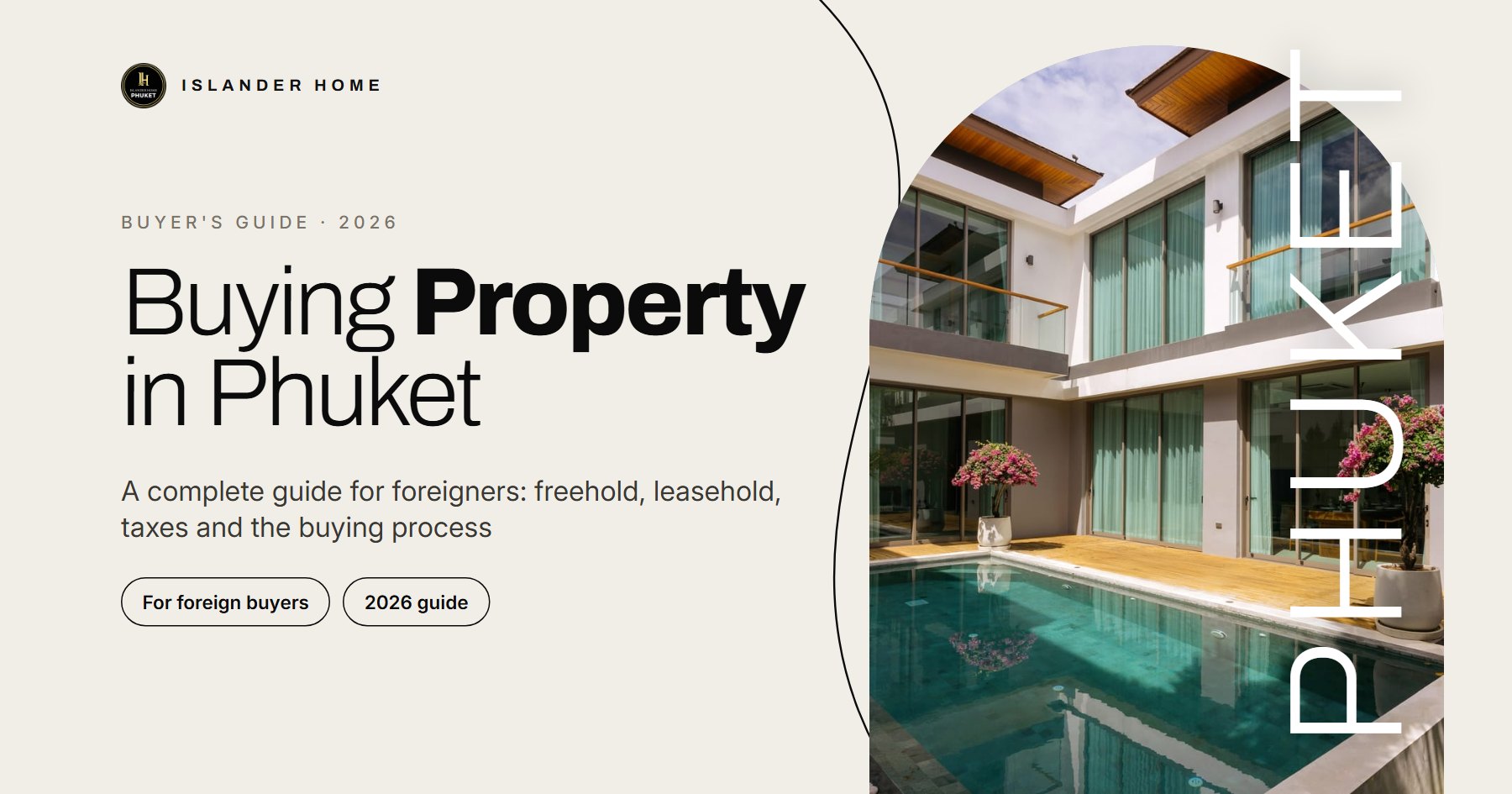
Buying Property in Phuket: A Complete Guide for Foreigners in 2026
By Islander Home Team
Foreigners buy property in Phuket all the time, and most do so legally and without trouble. Buyers who run into problems usually make one of a handful of avoidable mistakes: they do not understand what they actually own, skip proper checks, or use a company structure that was never legal in the first place.
This guide covers what you need to know before buying property in Phuket as a foreigner: what you can and cannot own, how freehold and leasehold work, the taxes and fees, the checks to run, and the buying process step by step. Where useful, we use figures from the Phuket property we currently have for sale.
This is a practical guide, not legal advice. Thai property law is specific and changes over time. Always have an independent, licensed Thai lawyer review a purchase before you sign anything.
Can foreigners buy property in Phuket?
Yes, with one major limitation. A foreigner can own a condominium unit outright (freehold), but cannot own land in their own name. Because a villa sits on land, buying a villa in Phuket as a foreigner means using a different structure, usually a registered lease.
| What you want to buy | Can a foreigner own it? | Usual structure |
|---|---|---|
| Condo unit | Yes, freehold | In your own name, within the building's foreign quota |
| Villa or house | The building yes, the land no | Registered land lease of up to 30 years, plus ownership of the house |
| Land plot | No | Registered lease, or a Thai spouse's name (with conditions) |
Buying a condo in Phuket: freehold in your own name
Under Thailand's Condominium Act, foreigners together can own up to 49% of the total saleable floor area of a condominium building. Within that quota, your name goes on the unit's title deed and you can sell it, mortgage it or leave it to your heirs like any other owner.
Three things matter in practice:
- Quota availability. Popular buildings can run out of foreign quota. Ask the building's juristic person (the owners' management office) to confirm in writing that quota is available before you pay a deposit.
- Money from abroad. For a freehold condo, the purchase money must come into Thailand in foreign currency. Your Thai bank issues a document confirming this, and the Land Office asks for it at transfer. Keep every transfer record.
- Units outside the quota can still be bought, but on a leasehold basis rather than freehold.
You may have read about plans to raise the foreign condo quota to 75%. The idea has been under cabinet study since late 2024, but as of September 2026 no bill had passed and the 49% cap still stands. Buy according to the rules that exist today.
Buying a villa in Phuket: leasehold and what it really means
Foreigners cannot hold land title in Thailand. The standard legal route for a villa has two parts:
- A registered land lease of up to 30 years, recorded on the title deed at the Land Office. A lease longer than three years that is not registered can only be enforced for three years, so registration is not optional.
- Ownership of the house itself, which a foreigner can hold separately from the land, commonly through a registered right of superficies (the right to own buildings on someone else's land).
Villa leases are often marketed as “30 + 30 + 30”. Only the first 30 years can be registered, and the renewals are now on much weaker ground than that marketing suggests.
In case 4655/2566, reported in March 2025, Thailand's Supreme Court held that pre-agreed automatic renewals of this kind are void. The lease and both extensions had been signed at the same time, prepaid in one payment, at the same rent and on identical terms. The Court treated that as an attempt to grant a 90-year lease, which would make the 30-year ceiling in Section 540 of the Civil and Commercial Code meaningless (Addleshaw Goddard, 10 March 2025).
The first 30-year lease still stands. What fell away was the assumption that years 31 to 90 were already secured. A renewal promise is personal to whoever signed it, so if the landowner sells, dies or goes bankrupt, their successor is not bound by it.
That does not make leasehold villas uninvestable. It makes the wording of the renewal clause particularly important. Lawyers working on these now advise renewals drafted as an option rather than an automatic extension, rent reviewed against an index rather than fixed for 90 years in advance, and a clear mechanism for the buildings to be transferred or compensated at market value. If you already hold a 30+30+30 lease, take it to a Thai lawyer rather than assuming the paperwork still does what you were told it does.
A government proposal to allow 99-year leases has been discussed since 2024. It has advanced and stalled several times and, as of September 2026, has not been enacted. The legal maximum is still 30 years. Buy according to the rules that exist today, not on a reform that may never arrive.
Other routes exist, but suit fewer buyers:
- A Thai spouse can own the land. The foreign spouse normally signs a declaration at the Land Office that the money belongs to the Thai spouse. Legally, the land is theirs.
- Usufruct gives you the right to use the property and earn income from it, for up to 30 years or for life.
- Section 96 bis of the Land Code allows a foreigner who invests at least ฿40 million in qualifying investments to buy up to one rai of land for a home, with ministerial approval. It is rarely used.
When a villa is advertised to foreigners as “freehold”, ask exactly whose name the land title will be in. Of the 143 villas on our sale list right now, 28 mention freehold and 22 mention leasehold in the listing. Tenure is always one of the first things to confirm.
Thai companies: what is legal and what is not
For years, a common workaround was a Thai company with Thai “nominee” shareholders holding 51% on paper while the foreign buyer controlled it. That structure has always been illegal. A company that holds land on behalf of a foreigner breaches both the Land Code and the Foreign Business Act.
In 2026, it became much harder to get away with. Under DBD Order 2/2568, from 1 January 2026 the Department of Business Development began requiring Thai shareholders to produce bank statements showing they genuinely have the money they claim to be investing, and from 1 April 2026 the same checks extended to changes of shareholders and directors (Global Law Experts, May 2026).
It went further in August. From 1 August 2026 Thai shareholders and directors must submit bank statements so the department can follow the money trail, with attention focused on 16 provinces — Phuket among them. Nearly 120,000 companies with foreign shareholdings between 0.01% and 49.99% have been flagged for inspection, and the DBD says the first round of checks cut nominee registration attempts by about 65% (The Nation, 16 July 2026). The Department of Lands is running a parallel check of company shareholder data against land records.
A company is only a sound way to hold property if it is a genuine business with genuine Thai shareholders investing their own money. If anyone suggests setting up a company “so you can own the land”, get an independent legal opinion before going any further.
Due diligence: the checks to run before you pay
A good lawyer runs these checks for you. Know what they are, so you can ask whether each one has been completed.
- Title deed type. A Chanote (Nor Sor 4 Jor) is full, surveyed title and is what you want to see. A Nor Sor 3 Gor is a lesser title. Check the original at the Land Office, not a photocopy.
- Who owns it, and what is registered against it. Confirm the seller is the registered owner, and check for mortgages, existing leases, rights of way and court orders.
- Legal road access. A villa at the end of a private lane needs a registered right of way.
- Building permits. Make sure what was built matches what was permitted, especially on hillside plots, which carry extra building restrictions in Phuket.
- For a condo: written confirmation of foreign quota, and a letter from the juristic person confirming there are no unpaid common fees. The Land Office will not transfer the unit without it.
- For off-plan property: the developer's track record, whether the land is already owned and permitted, and a payment schedule tied to construction progress rather than calendar dates.
- If you plan to rent it out: under Thailand's Hotel Act, rentals of less than 30 days need a hotel licence, and Phuket stepped up enforcement against unlicensed daily rentals in 2026. Check whether the property has a licence, or plan for monthly tenants.
Taxes and fees when you buy property in Phuket
Transfer costs are calculated on the Land Office's appraised value, which is usually lower than the price you pay. Who pays what is negotiable, so write it into the sale agreement.
| Fee or tax | Rate | Usually paid by |
|---|---|---|
| Transfer fee | 2% of appraised value | Often split 50/50 |
| Specific Business Tax | 3.3% | Seller, if they have owned it for less than 5 years |
| Stamp duty | 0.5% | Seller, only when Specific Business Tax does not apply |
| Withholding tax | Varies | Seller, based on their income tax position |
| Lease registration fee | 1% of the total rent for the whole lease | Negotiable |
| Lease stamp duty | 0.1% of the total rent | Negotiable |
A seller whose name has been in the house registration book for at least a year is exempt from Specific Business Tax. This is worth knowing when you negotiate who pays what.
Once you own the property, budget for the annual Land and Building Tax (small for most homes, but the rate depends on how the property is used), condo common area fees, and, on a new condo, a one-off sinking fund payment at handover. Rental income earned in Thailand is taxable in Thailand.
The buying process, step by step
- Choose the area, then shortlist. Area affects your daily life more than the house does. Our guide to the best areas to buy property in Phuket compares them side by side.
- Reserve. A reservation agreement and deposit take the property off the market while checks are completed. Make sure the agreement says when the deposit is refundable.
- Due diligence. Your lawyer runs the checks above.
- Sign the sale or lease agreement. It sets the price, the payment schedule, who pays which fees, the transfer date and what happens if either side does not complete.
- Send the funds from abroad, and keep the bank's foreign exchange paperwork.
- Transfer at the Land Office. Ownership or the lease is registered, the fees are paid and the title deed is updated, normally in a single visit.
- Handover. Utilities are moved into your name, and for a condo you register with the juristic person.
What your budget buys in Phuket right now
Across the properties we have for sale this month:
| Property type | For sale | Median asking price |
|---|---|---|
| Villa | 143 | ฿16,990,000 |
| House | 23 | ฿8,900,000 |
| Condominium | 19 | ฿2,390,000 |
Prices vary significantly by area. Median villa asking prices on our books range from ฿14.9 million in Koh Kaew and ฿13.9 million in Chalong to ฿23.3 million in Bang Tao. For the full breakdown, read Phuket Property Prices in 2026. If you are weighing a villa against a condo as an investment, we compare the two here.
Browse property for sale: Bang Tao & Cherngtalay · Rawai & Nai Harn · Chalong · Thalang · Koh Kaew · all Phuket property for sale
Thinking of buying a villa or condo in Phuket? Contact K. Thanya for current listings, viewings, and help working through the checks in this guide.
More from the journal
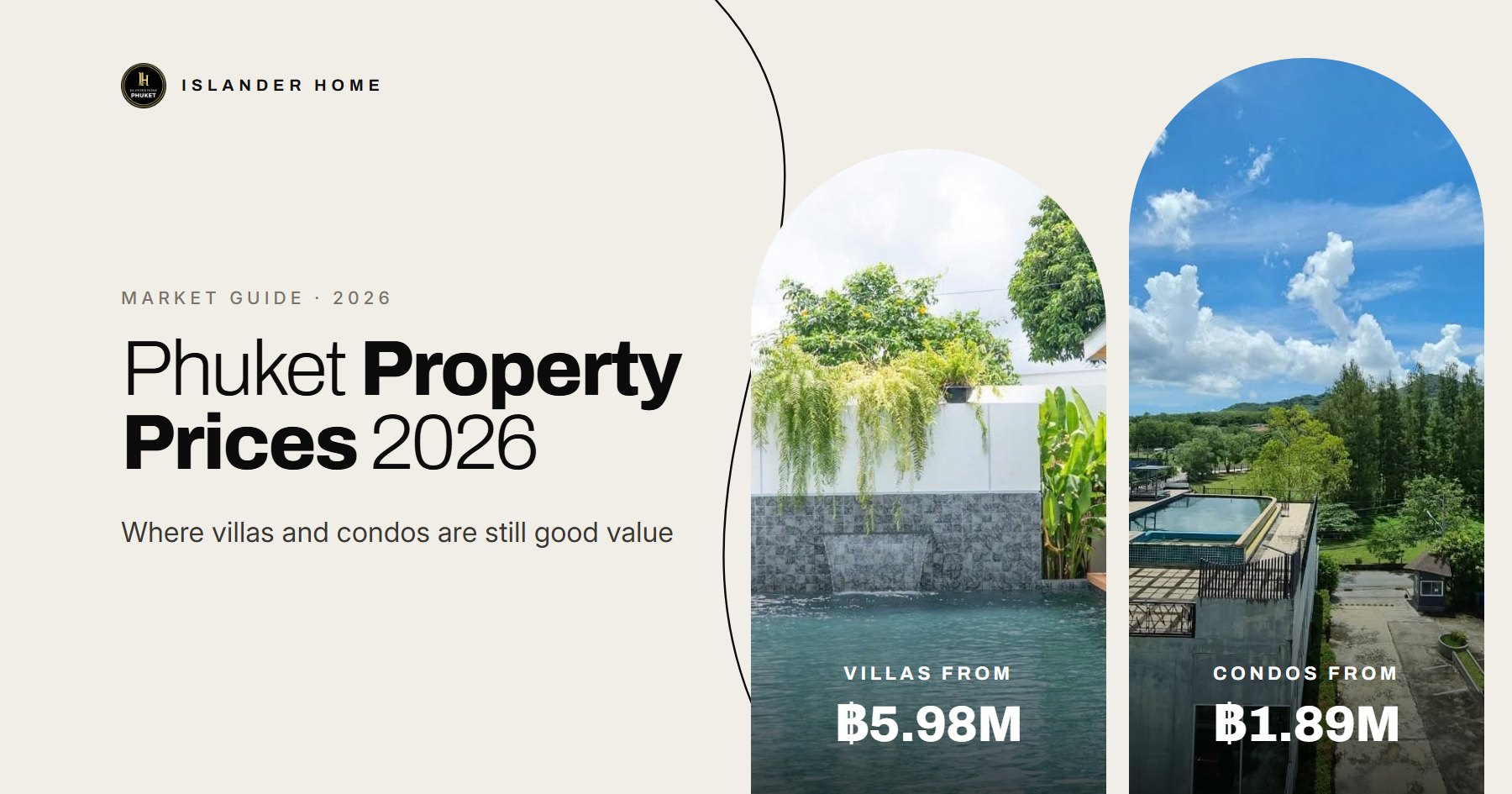
Phuket Property Prices in 2026: Where Are Villas & Condos Still Good Value?
Phuket property prices in 2026, area by area: villa and condo asking prices across the island, with real listings and where the value still is.
Read article →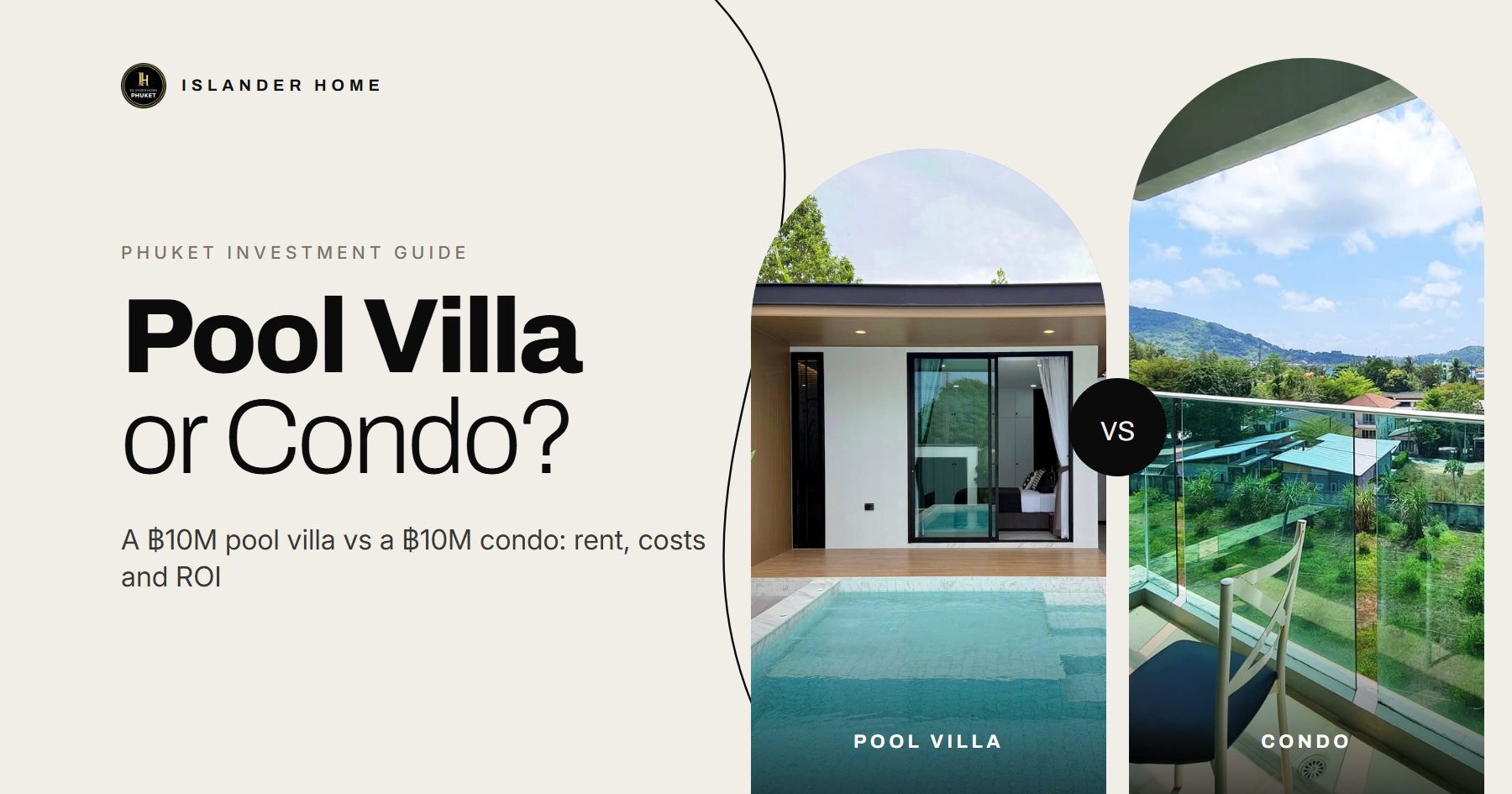
Phuket Villa Investment: Is Buying a Pool Villa Better Than a Condo?
Phuket villa investment: a ฿10M pool villa vs a ฿10M condo compared on rental income, running costs, land ownership, resale and ROI, using real listings.
Read article →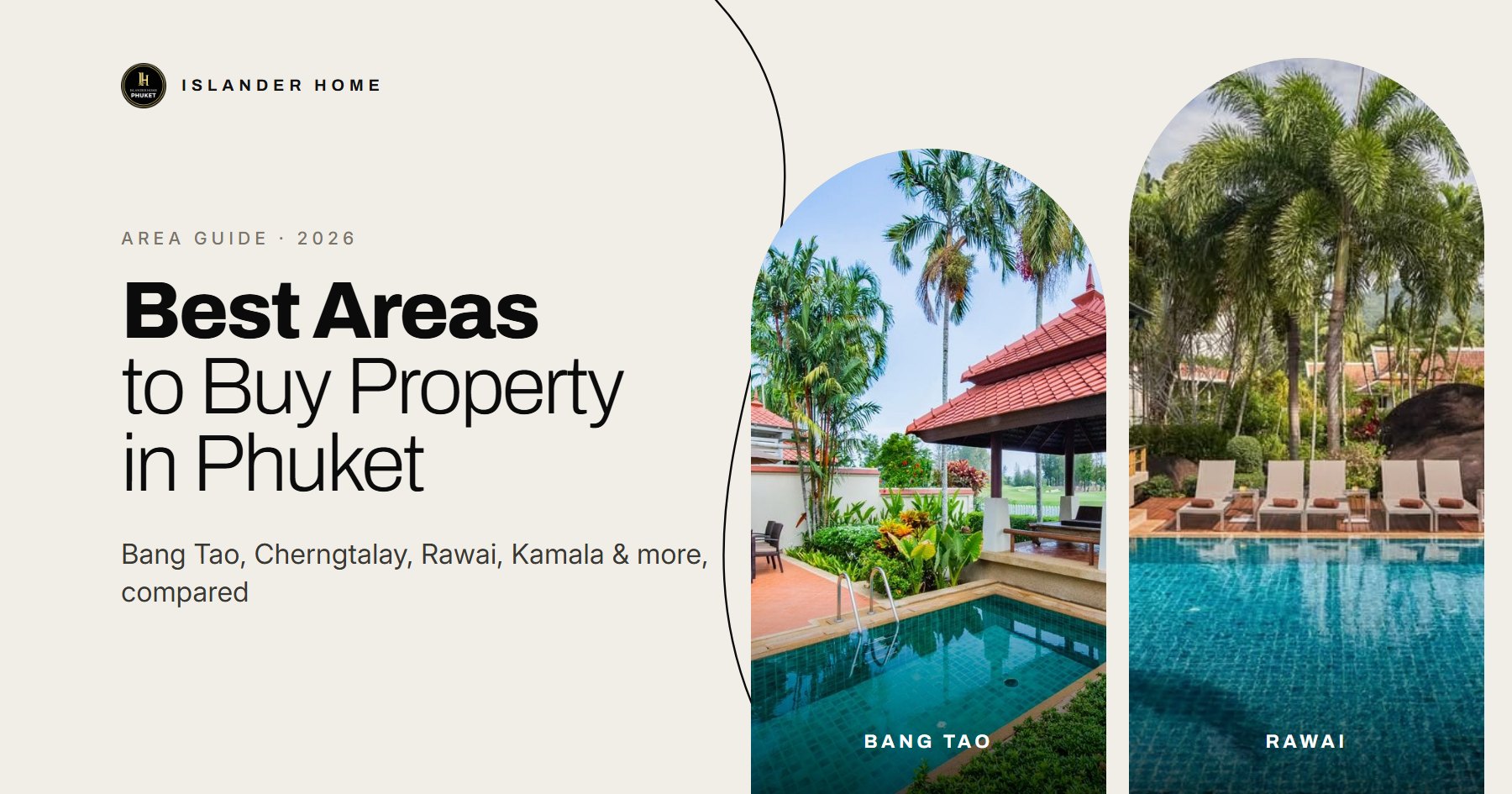
Best Areas to Buy Property in Phuket: Bang Tao, Cherngtalay, Rawai, Kamala & More
Where to buy property in Phuket in 2026: Bang Tao, Cherngtalay, Rawai, Thalang, Koh Kaew, Kamala and more, compared on price, rental demand and lifestyle.
Read article →
Let's talk
Ready to find your Phuket home?
Tell us what you're looking for and our advisors will curate a shortlist for you — usually within 24 hours.